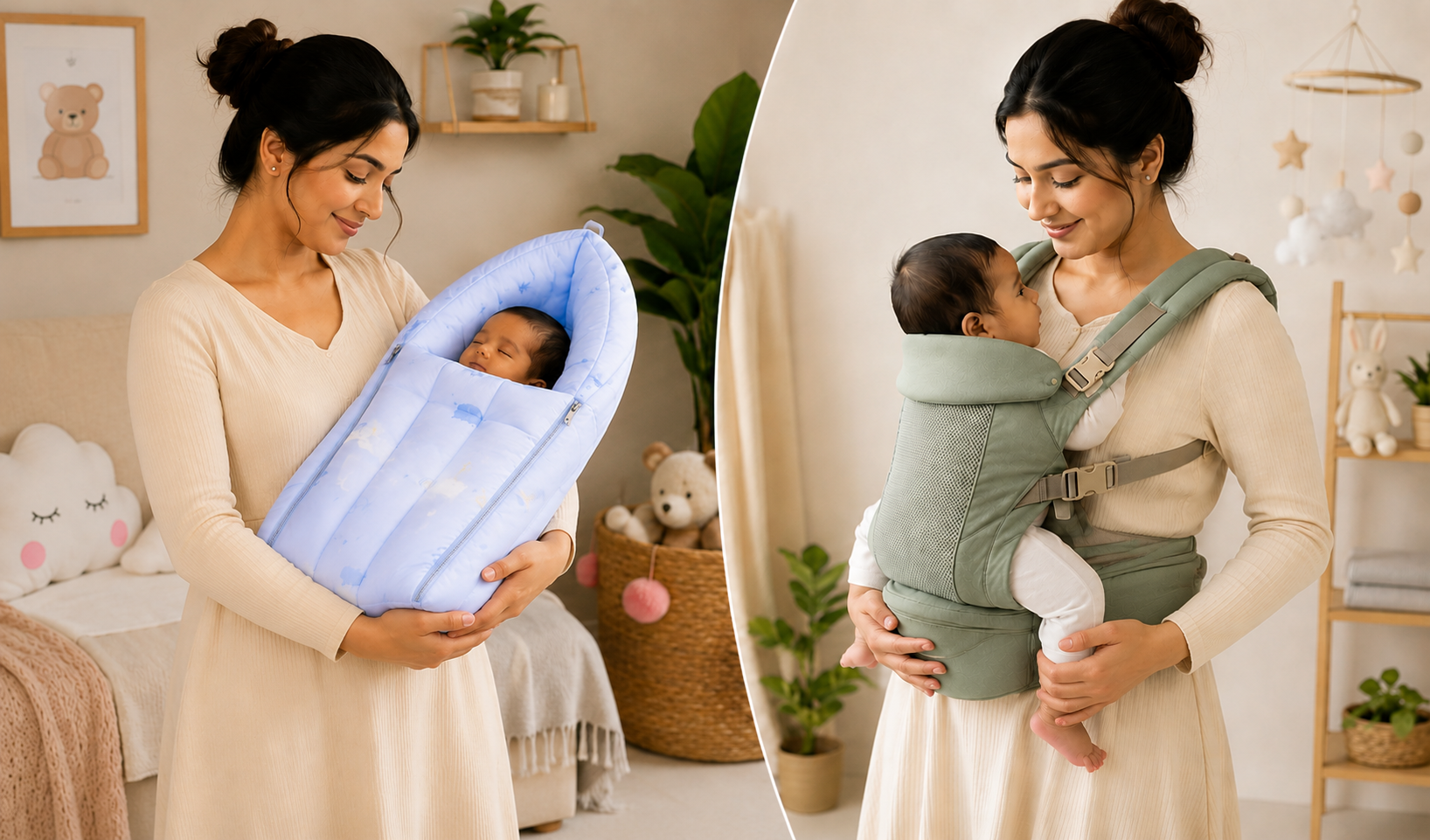
Baby Carrier Nest vs Traditional Baby Carrier: Which One Is Better?
As a new parent, you'll quickly realize that there are plenty of baby products that sound similar but serve very different purposes. One common question many parents have is whether to choose a baby carrier nest or a traditional baby carrier. While both help you carry your baby, they are designed for different stages and different needs.
The right choice depends on your baby's age, your daily routine, and how you plan to use it.
|
Baby Carrier Nest |
Traditional Baby Carrier |
|
Best suited for newborns and young infants. |
Suitable for babies with good neck and head control (depending on the carrier and manufacturer's guidelines). |
|
Allows your baby to lie in a supported, cozy position. |
Keep’'s your baby in an upright position against your body. |
|
Ideal for short outings, doctor visits, and carrying your baby around the house. |
Better suited for longer walks, shopping trips, or hands-free carrying. |
|
Easy to place your sleeping baby in without disturbing them. |
Babies usually need to be positioned inside the carrier while awake or with proper support. |
|
Lightweight and easy to carry from place to place. |
Requires straps, buckles, and proper adjustment for a secure fit. |
Which One Should You Choose?
If you have a newborn carrier on your shopping list, it's important to think about what will make those first few months easier. During the newborn stage, babies spend most of their time sleeping and need gentle support for their head, neck and back.
A carry nest offers a cozy space where your little one can stay comfortable while moving from room to room, visiting family, or heading to routine check-ups. It also makes it easier to lift a sleeping baby without disturbing their rest.
- Proper support for your baby's head, neck, and back.
- Soft, breathable, baby-friendly fabrics.
- A lightweight design that's easy to carry.
- Secure closures and comfortable padding.
- Easy-to-clean materials for everyday use.
- A Thoughtful Choice for the Newborn Stage
For those early months, our Kicks & Crawls Tiny Trunks Carry Nest is designed to make everyday life a little simpler. Crafted with soft, baby-friendly fabric and a cushioned interior, it creates a snug and comfortable space for your little one.
Its lightweight design makes it easy to carry around the house or during short outings, while secure fastenings help keep your baby comfortably supported.
The newborn days are filled with cuddles, feeds, and plenty of precious naps. Choosing products that fit naturally into your routine can make those everyday moments feel less stressful and more enjoyable.
Whether you're heading to the pediatrician, visiting grandparents, or simply moving your baby from one room to another, our thoughtfully designed carry nest can become one of those essentials you'll reach for again and again.
Frequently Asked Questions
1. What is the difference between a baby carrier nest and a traditional baby carrier?
A baby carrier nest lets newborns lie in a cozy, supported position, while a traditional baby carrier holds babies upright and is better suited for older infants with good head and neck control.
2. At what age can I use a baby carrier nest?
A baby carrier nest is ideal from birth until around 3–6 months, depending on your baby's size and the product's weight limit.
3. When can I switch to a traditional baby carrier?
Most babies can use a traditional carrier once they have good head and neck control, typically around 4–6 months, or as recommended by the manufacturer.
4. Is a baby carrier nest safe for newborns?
Yes, when used according to the manufacturer's instructions, a baby carrier nest provides comfortable support for a newborn's head, neck, and back during short outings and everyday use.
5. What features should I look for in a baby carrier nest?
Choose one with soft, breathable fabric, proper head and neck support, secure fastenings, lightweight construction, and easy-to-clean materials for everyday convenience.
6. Can my baby sleep in a baby carrier nest?
A baby may nap in a carrier nest while being carried, but it should not be used as a substitute for a crib or bassinet for unsupervised sleep.