Silicone vs Stainless Steel Baby Spoons: Which Should You Choose?
Starting solids is exciting, messy and, if we’re being honest, a little chaotic. One day your baby is happily drinking milk, and suddenly you’re wondering whether you need silicone, stainless steel or both for that first spoonful.
The good news? You don’t need to overthink it. The right spoon is one that is safe, comfortable for your baby, easy to clean and suited to their stage of feeding.
The good news? You don’t need to overthink it. The right spoon is one that is safe, comfortable for your baby, easy to clean and suited to their stage of feeding.
How We Picked These
Choosing a baby spoon comes down to the everyday stuff — what it's made of, how gentle it feels on tiny gums, whether it's a pain to clean, how long it'll hold up, and whether your baby (and you) can actually get a grip on it. That's what we focused on here, alongside guidance from the American Academy of Pediatrics and FDA food-contact safety standards, so this isn't just our opinion.
Around 6 Months:
Silicone Is a Gentle Place to Start
Those first weeks of solids are messy and a little chaotic — in the best way. Your baby isn't just learning to eat, they're learning to hold a spoon, get it to their mouth, and make sense of this whole new "food" thing. A silicone spoon with a small bowl, soft edges, and an easy-to-hold handle takes some of the guesswork (and gum-poking) out of those early tries.
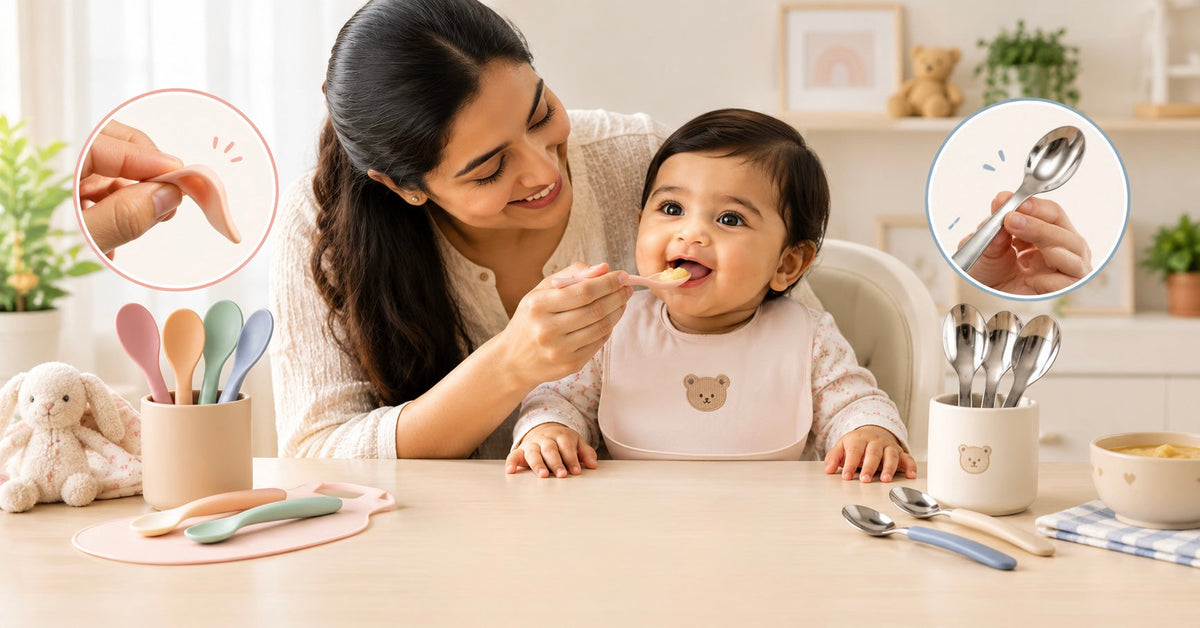
The Blue Long Silicone Spoon fits the brief well: a long, gripped handle that's easy for small hands — and tired parent hands — to hold onto, a suction base that keeps it from sliding off the tray, and soft silicone that's gentle on new gums.
Mum tip: Your baby may take a few attempts to understand what to do with a spoon.
Give them time, there is no prize for finishing the bowl on day one!
6–9 Months: Think About Grip and Control
As babies become more interested in holding the spoon themselves, choose something with a comfortable handle that is easy for little hands to grasp.
Silicone remains a practical option here, especially if your baby likes chewing on the spoon between bites. Stainless steel can also work well, particularly for parents who prefer a firm, durable utensil.
A stainless steel spoon is not automatically safer than silicone. What matters is that the food-contact surface is safe, smooth, durable and easy to clean. FDA food-code principles specifically call for food-contact utensils to be safe, nonabsorbent and easily cleanable.
Silicone vs Stainless Steel: Which One Wins?
Silicone remains a practical option here, especially if your baby likes chewing on the spoon between bites. Stainless steel can also work well, particularly for parents who prefer a firm, durable utensil.
A stainless steel spoon is not automatically safer than silicone. What matters is that the food-contact surface is safe, smooth, durable and easy to clean. FDA food-code principles specifically call for food-contact utensils to be safe, nonabsorbent and easily cleanable.
Silicone vs Stainless Steel: Which One Wins?
Choose silicone if: you want a softer spoon for early feeding, your baby is teething, or you prefer a lightweight option.
Choose stainless steel if: you value durability, a firm spoon shape and a material that can last through years of everyday use.
Additionally, you are not required to select just one. For early feedings, many mothers use silicone spoons; as their infant gains confidence.
What About a BPA-Free Spoon?
BPA-free” is useful information, but it shouldn’t be the only thing you look for. FDA explains that BPA is used in some food-contact materials and that food-contact substances are evaluated for their potential migration into food.
Look beyond the label: check the material, manufacturer’s care instructions, age guidance and condition of the spoon.
If you’re buying your first spoon, I’d start simple. A soft silicone spoon is usually an easy, comfortable introduction, and the Kicks & Crawl Baby Blue Long Silicone Spoon is designed specifically around that early-feeding experience.
Most importantly, remember that starting solids is a learning process. Your baby doesn’t need the fanciest spoon, they need a safe spoon, a little patience and a mum who doesn’t mind cleaning sweet potatoes off the high chair for the tenth time.
Look beyond the label: check the material, manufacturer’s care instructions, age guidance and condition of the spoon.
If you’re buying your first spoon, I’d start simple. A soft silicone spoon is usually an easy, comfortable introduction, and the Kicks & Crawl Baby Blue Long Silicone Spoon is designed specifically around that early-feeding experience.
Most importantly, remember that starting solids is a learning process. Your baby doesn’t need the fanciest spoon, they need a safe spoon, a little patience and a mum who doesn’t mind cleaning sweet potatoes off the high chair for the tenth time.
Frequently Asked Questions
1. When should I introduce a spoon to my baby?
Most babies start exploring spoon-feeding around 6 months, once they begin complementary foods. A soft silicone spoon with a small bowl and easy-grip handle is a gentle way to ease into it.
2. Is "BPA-free" enough to know a spoon is safe?
It's a useful detail, but not the full picture. The FDA evaluates food-contact substances for how they might migrate into food, so it's worth also checking the material itself, the care instructions, and the age guidance — not just one label.
3. Can I use both silicone and stainless steel spoons?
Yes, and many parents do exactly that — starting with silicone for the earliest feeds, then bringing in stainless steel as their baby gets steadier with grip and control.
4. Is silicone or stainless steel better for a teething baby?
Silicone is usually the more comfortable pick if your baby likes to chew on the spoon between bites, since it's softer on sore gums. Stainless steel can still work, but it won't feel as soothing during teething.
5. How do I clean a silicone baby spoon?
5. How do I clean a silicone baby spoon?
Look for one that's dishwasher-safe or easy to hand-wash in warm, soapy water. A spoon you can actually keep clean without a hassle matters just as much as what it's made of, especially with how often it's used.